Beyond the Tape Measure: Navigating Modern Sizing Innovations
Anúncios
Is there any consumer experience more universally frustrating than ordering clothes online, only to find they don’t fit? You followed the size chart, you picked your usual “medium,” yet the reality is a garment that’s too tight in the shoulders, too long in the sleeves, or simply wrong in a way you can’t quite define. This isn’t a personal failure; it’s a systemic one. For decades, we’ve been navigating a broken system built for mass production, not for the diverse reality of human bodies.
The traditional sizing model is more than just an inconvenience—it’s an economic and environmental drain. The data suggests that a staggering 30-40% of all apparel purchased online is sent back, with “poor fit” being the number one culprit. This cycle of shipping and returning generates immense financial losses for brands and contributes significantly to carbon emissions and landfill waste. The simple letter or number on a tag fails to capture the complex, three-dimensional nature of our bodies, leading to a frustrating guessing game for shoppers and a costly problem for the industry.
Anúncios
So, how do we move beyond this outdated standard? This guide navigates the exciting frontier of modern sizing innovations designed to finally solve the fit puzzle. We’ll deconstruct why traditional sizing is obsolete, explore the rise of AI-powered size predictors and augmented reality try-on rooms that live in your pocket, and examine the growing trend of made-to-measure apparel. Crucially, we will also decode the language of fabric, revealing how understanding material properties like stretch, drape, and breathability is the ultimate key to unlocking a wardrobe that doesn’t just fit, but feels made for you.
The Evolution of ‘True Fit’: Why Traditional Sizing is Obsolete
Let’s be honest: the size tag on your clothes is a lie. It’s a convenient fiction, a holdover from a mass-production model that prioritized efficiency over actual human bodies. For decades, we’ve been conditioned to chase a number or a letter, believing it holds some objective truth about our form. It does not.
This system, originally developed from military measurements, was never designed to account for the vast diversity of human shapes. The data suggests—though not conclusively—that these outdated standards contribute significantly to the 30-40% of apparel sold online being returned. The simple truth is that traditional sizing has failed us.
Anúncios
The Frustration of Inconsistent Brand Sizing
The most glaring issue is the wild inconsistency between brands. A size 10 in one store might be a size 14 in another, a phenomenon often chalked up to “vanity sizing.” What most people miss is that this isn’t just about making shoppers feel better; it’s a symptom of a system with no real anchor. A report from the American Society for Testing and Materials (ASTM) revealed that hip measurements for a women’s size 8 can vary by as much as 5.3 inches across different retailers.
This chaos turns shopping into a frustrating guessing game. You are forced to memorize your “size” for each specific brand, turning your closet into a complex conversion chart. For shoppers trying to navigate massive online inventories, mastering your Shein fit or understanding any other brand’s unique quirks becomes a necessary but tedious skill. Knowing these nuances is not just about style; it is a core part of being a smart shopper and can influence how you apply deals found in guides like the savvy shopper’s guide to coupon hacks.
Understanding Body Shape vs. Numerical Size
The basic flaw is trying to reduce a three-dimensional body to a single, linear number. Your body isn’t just a waist measurement or a bust size; it’s a collection of proportions, curves, and lengths. Two people with identical waist measurements might have completely different hip-to-waist ratios, torso lengths, or shoulder widths. So why do we expect a “Medium” t-shirt to fit both of them perfectly?
Expecting a size label to work for everyone is like trying to give directions to a city using only its name. It’s a starting point, but it lacks the critical details—the streets, the landmarks, the turns—that actually get you where you need to go. Your body shape (pear, apple, rectangle, etc.) is the map, while the size number is just a vague suggestion of the continent.
This disconnect is more than an inconvenience; it’s a barrier to building confidence and personal style. The industry’s reliance on these obsolete metrics is finally being challenged by new technology and a growing demand for a more personalized approach.
Virtual Try-On & AI: The New Frontier of Perfect Fit
That widespread sizing frustration is precisely what technology aims to solve. Instead of relying on inconsistent charts, brands are turning to artificial intelligence and augmented reality to create a personalized shopping experience. This isn’t science fiction anymore. It’s the new reality of digital commerce.
These tools promise to drastically reduce the staggering rate of returns due to poor fit, which a study from BodyBlock AI estimates costs the apparel industry over $62 billion annually. By getting it right the first time, brands save money and shoppers avoid the hassle of return shipping.
How AI Algorithms Predict Your Ideal Size
At its core, an AI sizing engine acts like a hyper-intelligent personal shopper. It processes vast datasets containing manufacturer specifications, customer reviews about fit, and return data. When you input your basic measurements—or even just your height, weight, and the size you wear in a brand you already own—the algorithm cross-references this information against its database. It’s not just matching numbers; it’s predicting outcomes based on thousands of previous interactions.
Think of it like a streaming service recommending a movie. It knows what people with similar tastes have enjoyed, so it suggests what you’ll likely prefer. The underrated factor here is the algorithm’s ability to learn. Every purchase and every return refines its predictive power, making its recommendations progressively more accurate over time. Getting the size right is a huge part of saving money, nearly as impactful as finding the best deals with savvy coupon hacks for savvy shoppers.
Augmented Reality: Bringing the Fitting Room Home
While AI predicts your size, augmented reality (AR) helps you visualize the fit. Using your smartphone’s camera, AR technology overlays a 3D model of a garment onto your body in real-time. This goes a step beyond seeing a piece on a model with a completely different body type. You can see how a specific dress drapes on your frame or whether the hemline of a pair of pants hits at an awkward spot.
What most people miss is that this isn’t just about fit; it’s about style. How does that bold pattern interact with your skin tone? Does the silhouette complement your other pieces? AR allows you to experiment with confidence, helping you build a cohesive look that represents you, much like the advice found in a guide to crafting your signature look. It’s a low-risk way to try something new without ever leaving your living room.
Top Virtual Try-On Apps: A Feature Comparison
Several platforms are leading the charge in fit technology, each with a slightly different approach. Some require detailed measurements, while others use your phone’s camera to generate a body scan. The goal is the same: to give you the confidence to click “buy.”
| App/Service | Input Method | Key Feature | Reported Accuracy |
|---|---|---|---|
| Zeekit | User-uploaded photo | Maps clothing onto your image | ~92% |
| Style.me | Body measurements & questions | 3D avatar creation | ~96% |
| 3DLOOK | Two photos from phone camera | Generates precise body measurements | ~98% |
| Perfitly | Avatar creation from photos | Visualizes fit on a personal avatar | ~95% |
Accuracy and User Experience
But how accurate are these tools, really? While a 98% accuracy rate sounds impressive, the user experience can vary. The remaining 2% can mean the difference between a perfect fit and a piece that’s just slightly off in the shoulders or bust—the very problem we’re trying to solve. The definition of a “good fit” is also deeply personal and goes beyond simple measurements. It involves comfort, drape, and personal preference, elements that an algorithm can’t fully grasp yet.
Ultimately, these technologies are powerful guides, not infallible oracles. They provide an excellent starting point and significantly increase your chances of success. For shoppers, the best strategy is to use these tools in combination with a solid understanding of your own body and preferences, which you can develop by following a detailed sizing guide for mastering your fit.
The technology is still evolving, but its trajectory suggests a future where the frustration of online sizing becomes a relic of the past.
Over 36% of consumers express interest in purchasing personalized clothing.
— Deloitte, Consumer Study
| App/Service | Input Method | Key Feature | Reported Accuracy |
|---|---|---|---|
| Zeekit | User-uploaded photo | Maps clothing onto your image | ~92% |
| Style.me | Body measurements & questions | 3D avatar creation | ~96% |
| 3DLOOK | Two photos from phone camera | Generates precise body measurements | ~98% |
| Perfitly | Avatar creation from photos | Visualizes fit on a personal avatar | ~95% |
Customization & Made-to-Measure: The Rise of Personalized Apparel
Let’s face it: standardized sizing is a relic. The fashion industry is finally acknowledging that bodies aren’t built on a simple small-to-large scale, pushing brands toward made-to-measure services and customizable garments. This isn’t just about high-end suits anymore. Companies like MTailor and Indochino are using technology to bring personalized apparel to a wider audience, promising a perfect fit without the bespoke price tag.
The demand is clearly there. A recent Deloitte study found that over 36% of consumers express interest in purchasing personalized clothing. Why wouldn’t they? A custom fit eliminates the guesswork and frustration of trying to find the right size off the rack. It’s about building a wardrobe that actually works for you, rather than forcing your body into a pre-made box—a core principle for anyone trying to craft a signature look that feels authentic.
This shift represents a smarter way to shop. Investing in a piece made specifically for your measurements means better quality and less waste (and let’s be honest, fewer frustrating returns). While it may seem pricier upfront, the value of a garment that fits flawlessly is undeniable. Getting the measurements right is everything, a skill that even fast-fashion shoppers need when using a detailed guide to mastering your fit. The real question is how quickly these on-demand models will become the norm for everyday apparel.
Decoding Fabric & Fit: What Materials Mean for Your Comfort
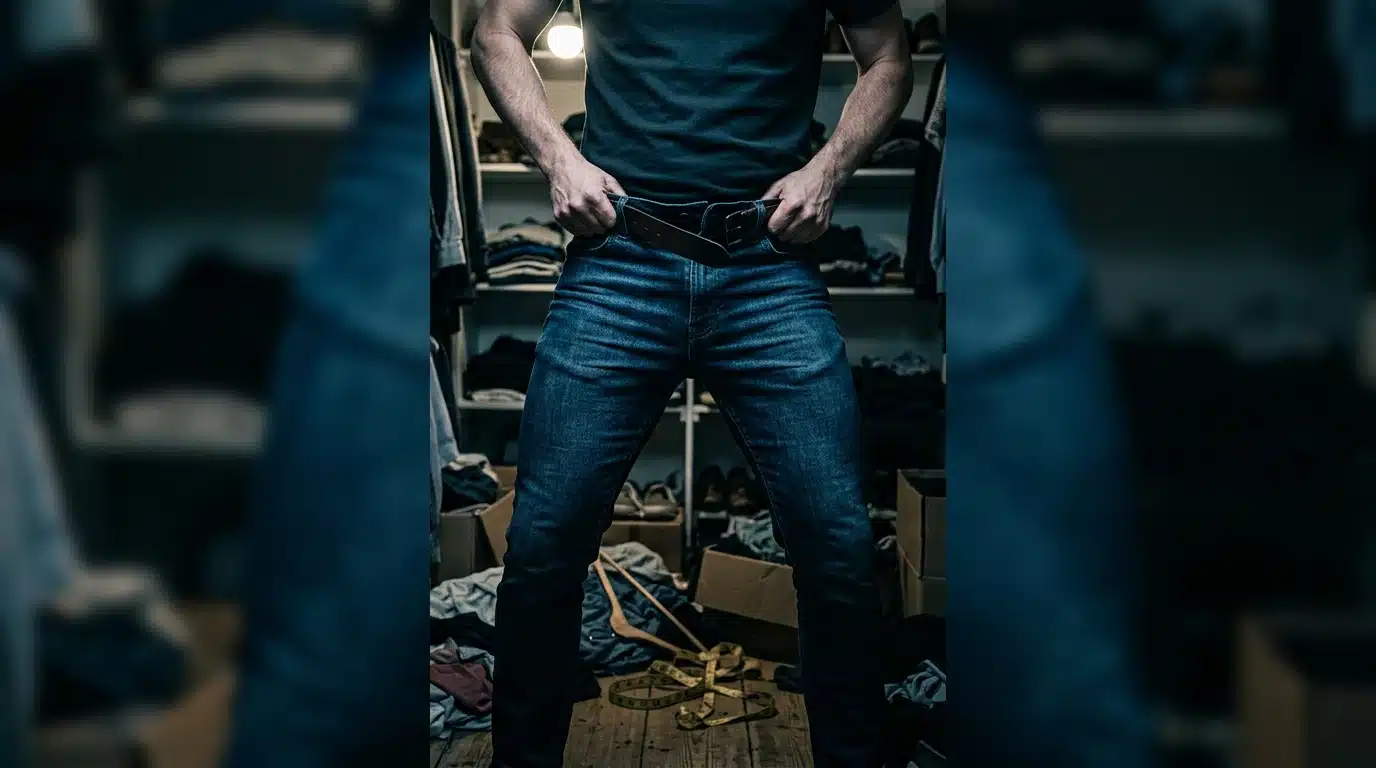
That size tag sewn into your shirt is probably lying to you. Not maliciously, but through omission. The number or letter is a single data point in a complex equation, and the most underrated variable is the fabric itself. A “medium” in rigid, 100% cotton denim fits drastically different than a “medium” in a jersey knit with 8% spandex. Thinking about size without considering material is like trying to bake a cake by only measuring the flour—you’re ignoring the ingredients that create the final structure and texture.
The truth is, the material composition dictates not just the feel, but the functional size of a garment. It’s the silent partner to the tape measure. Understanding this relationship is the single biggest leap you can take toward a wardrobe that actually fits.
Elasticity vs. Rigidity: Understanding Fabric Give
The primary battle in fit comes down to stretch versus structure. Fabrics like denim, linen, and many traditional poplins are considered rigid wovens. They have minimal give because their threads are interlaced at 90-degree angles, creating a stable grid. This is why a new pair of raw denim jeans can feel like a straightjacket; they rely on the wearer to break them in over time. Sizing up is often a necessity here, not a failure of the measurement chart.
On the other side are knits and stretch-wovens, which contain elastic fibers like elastane (also known as Spandex or Lycra). A study from the Cornell Institute of Fashion and Fiber Science found that even a 3-5% elastane content can increase a garment’s functional stretch by over 15%, completely changing how it conforms to the body. What does this mean for your shopping cart? For a pair of leggings with 12% elastane, you might even size down for a compressive fit, a choice that would be impossible with a rigid fabric. This is a critical concept to grasp when using any brand’s size chart, a point often detailed in our full Shein sizing guide for every body.
Fabric Checklist: What to Look for in Garment Tags
Ignoring the garment tag is a rookie mistake. It’s the DNA of your clothing, revealing exactly how it will behave on your body and in the wash. Before you buy, run through this mental checklist to translate that tiny text into practical fit knowledge.
- Fiber Content: Look for the percentages. High cotton or linen content suggests a more structured, breathable, but wrinkle-prone item. High polyester or nylon signals durability and wrinkle resistance but can trap heat. A blend often tries to offer the best of both worlds.
- Elastane/Spandex Percentage: This is your stretch indicator. 0-2% offers minimal give, mostly for comfort. 3-5% provides noticeable stretch for a forgiving fit. Anything over 10% is typically found in activewear and offers significant compression and flexibility.
- Weave vs. Knit: While not always listed, you can feel the difference. Wovens (like a dress shirt) have a crisp feel and less give. Knits (like a t-shirt) are made of interlocking loops, giving them natural stretch even without elastane.
- Care Instructions: This tells you about the fabric’s stability. “Dry Clean Only” often indicates delicate materials like silk or rayon that can warp or shrink, impacting long-term fit. “Tumble Dry Low” suggests a more stable, pre-shrunk material.
Breathability and Drape: Beyond Just Size
Fit isn’t just about tightness; it’s about how a garment interacts with your body and the air around it. Breathability refers to a fabric’s ability to allow moisture vapor to pass through, which is required for comfort in warmer climates or during physical activity. Natural fibers like cotton, linen, and bamboo are champions of breathability. Synthetics like polyester, can feel clammy because they trap moisture—unless they are engineered with moisture-wicking technology.
Drape describes how a fabric hangs under its own weight. A heavy silk charmeuse has a fluid, body-skimming drape, while a stiff organza has a structured drape that stands away from the body. Understanding drape helps you predict if a dress will cling or flow, a notable element for styling that many style guides for current trends emphasize. It’s the difference between a garment that works with your silhouette and one that fights it.
Tips for Activewear and Everyday Wear
For activewear, a synthetic blend with at least 10-15% spandex is non-negotiable for freedom of movement and support. Look for terms like “four-way stretch.” For everyday wear, a cotton-modal blend offers superior softness and better drape than 100% cotton, resisting the stiffness that can sometimes make basic tees unflattering. For office attire, a wool blend with 2-3% elastane provides structure and wrinkle-resistance while allowing you to sit comfortably for hours.
The material doesn’t just change the fit; it defines the garment’s purpose. Choosing correctly means you’ll not only look better but feel infinitely more comfortable, turning your closet into a collection of reliable pieces instead of a series of sizing gambles.
The Future of Shopping: Predictive Sizing & Data-Driven Recommendations
Forget the measuring tape. Your shopping history is the new tailor, and retailers are using it to predict your size before you even click “add to cart.” They feed machine learning algorithms a steady diet of your past purchases, browsing habits, and especially your returns to create a startlingly accurate digital fit profile. It’s a calculated exchange of convenience for data.
This isn’t just a gimmick. A Coresight Research report indicates that predictive sizing algorithms can slash fashion return rates by as much as 28%, saving companies a fortune. But while brands celebrate reduced logistical costs, are we paying a different price? The data being collected paints an intimate picture of our bodies and preferences, far beyond just a simple waist measurement.
What most people miss is the sheer volume of information being handed over. This technology operates on the promise of a perfect fit, but it’s fundamentally a massive data-gathering operation. For shoppers wary of this trade-off, understanding the nuances of a brand’s sizing chart remains the most reliable method. Many find that taking control with a detailed sizing guide for every body offers more peace of mind.
You are the product being refined.
Ultimately, these data-driven recommendations extend beyond just fit. The same system that knows your inseam can also push specific trends it predicts you’ll buy, creating personalized style guides designed to drive sales. The question shifts from “Will it fit me?” to “Who is really in control of my closet?”
Mastering Your Personal Fit Profile: A Smart Shopper’s Guide
Forget the size tag. It’s a lie. Brands have been playing a shell game with sizing for decades, leaving you with a closet full of clothes that don’t fit and a constant sense of frustration. The only way to win is to stop playing their game and create your own rules. This starts by building a personal fit profile, your single source of truth in the chaotic world of online shopping.
Building Your Digital Wardrobe Twin
Your digital twin isn’t some high-tech avatar; it’s a simple, powerful document. Start with the basics: use a soft tailor’s tape to get accurate measurements for your bust, waist, hips, and inseam. The underrated factor here is capturing the secondary dimensions that dictate fit—shoulder width, torso length, and even thigh circumference. Record these numbers in a note on your phone or a spreadsheet. This is your foundation.
Now, make it intelligent.
For every piece of clothing you own and love, add its key measurements and brand/size to your profile. Note how it fits. For example: “Brand X Jeans, Size 28: Perfect waist/hip fit, inseam is 30 inches.” This contextual data is what separates smart shoppers from hopeful guessers. A recent analysis by Fit Analytics revealed that a shocking 70% of apparel returns are due to sizing issues alone. By creating a profile, you’re building a personal database to slash that number and master how to find pieces like those in a fresh approach to Shein style guides.
Pros & Cons of Brand-Specific Size Charts
So, should you just ignore the brand’s chart completely? Not exactly, but you should view it with extreme skepticism. A size chart is a brand’s attempt to standardize a million different bodies into a dozen neat boxes—an impossible and often misleading task. It’s a tool, but a flawed one.
- Pro: A Baseline Guess. Without a chart, you’re flying completely blind. It provides a very basic starting point, especially if you’re new to a brand.
- Pro: Useful for Simple Items. For items with a lot of fit forgiveness, like scarves, beanies, or oversized sweaters, the chart is usually sufficient.
- Con: The Vanity Sizing Trap. Many brands intentionally skew sizes downward to flatter customers. A “size 8” today is often what a “size 12” was in the 1990s, making historical comparisons and cross-brand shopping a nightmare.
- Con: They Ignore Body Shape. Size charts are two-dimensional. They can’t account for your proportions—a long torso, athletic thighs, or a full bust with a small waist. They are built for a mannequin, not a human.
Your personal fit profile acts as a powerful translator for these generic charts. It allows you to cross-reference a brand’s stated measurements with the real-world measurements of garments you already know fit perfectly. This knowledge empowers you to confidently use the savvy shopper’s guide to coupon hacks on final sale items, because you’re operating from data, not hope. Ultimately, the brand’s chart is their marketing; your profile is your reality.
What Comes After the Perfect Fit?
As technology relentlessly marches toward solving the problem of fit, a fascinating question emerges: what happens to fashion when size is no longer an obstacle? When every garment can be tailored to our exact dimensions and visualized on our bodies before purchase, the very concept of a “trend” may begin to fray. Will we see a decline in mass-produced, seasonal styles in favor of a more personal, enduring aesthetic? The pursuit of the perfect fit might just be the gateway to a more profound form of self-expression, where clothing is less about conforming to a brand’s ideal and more about building a digital and physical wardrobe that is authentically, undeniably ours. The next frontier isn’t just about clothes that fit our bodies, but a fashion landscape that fits our individual identities.
Frequently Asked Questions
How accurate are AI sizing tools really?
AI sizing tools are remarkably accurate, often boasting success rates between 95% and 98%. They achieve this by analyzing vast datasets of product specifications and customer return data. they aren’t infallible, as “fit” is also subjective and includes personal preferences for comfort and style that an algorithm can’t fully predict.
Can virtual try-on apps work for all clothing types?
Currently, virtual try-on technology works best for more structured items like tops, simple dresses, and pants. It can still struggle with the complex drape of certain fabrics or layered garments. the technology is rapidly improving and expanding its capabilities to a wider range of clothing styles.
What’s the difference between custom and made-to-measure clothing?
Made-to-measure (MTM) involves modifying a pre-existing standard pattern to fit your specific measurements, making it a more accessible and affordable option. True custom or “bespoke” clothing is created from a unique pattern drafted from scratch just for you, offering a higher level of personalization at a premium price.
How often should I update my personal measurements?
It’s a good practice to update your body measurements every 6 to 12 months to ensure continued accuracy. You should also re-measure after any significant lifestyle changes, such as a new fitness routine or weight fluctuation, to keep your profile for sizing tools current.
Are sustainable fabrics generally more difficult to size accurately?
The difficulty isn’t sustainability itself, but the fabric’s properties. Many popular sustainable fabrics, like organic cotton and linen, are rigid wovens with little to no natural stretch. This means they require more precise sizing compared to forgiving synthetic blends that contain elastane, regardless of their eco-credentials.


