Unlock an Extra 15% Off Your Next Purchase: Insider Strategies for Stacking Retailer Sales in 2026

Anúncios
In the ever-evolving landscape of retail, where every penny counts and budgets are tighter than ever, the art of smart shopping has become a crucial skill. Forget simply waiting for a sale; the true maestros of saving understand that the real magic happens when you master the technique of stacking retailer sales. Imagine consistently shaving an extra 15% or more off your purchases – not through luck, but through calculated strategy. This isn’t about being a coupon queen or king; it’s about understanding the intricate dance between store policies, manufacturer offers, and loyalty programs to unlock unparalleled savings. As we look ahead to 2026, the strategies for maximizing your retail discounts are becoming more sophisticated, and this comprehensive guide is your roadmap to becoming a savvy shopper who never pays full price.
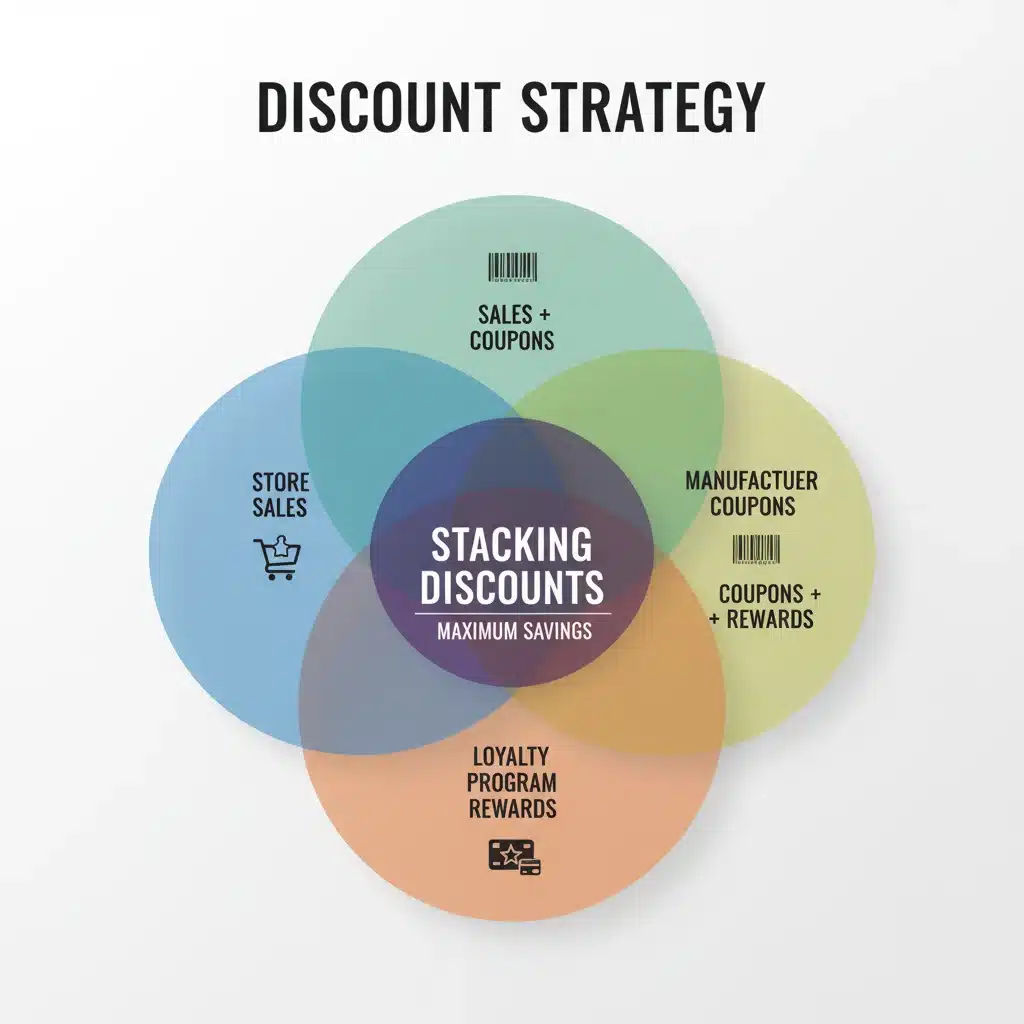
The concept of stacking retailer sales might sound complex, but at its core, it’s about combining multiple discounts on a single item or transaction. This could mean using a store coupon on an item already on sale, applying a manufacturer coupon on top of a store discount, or leveraging loyalty points in conjunction with promotional offers. The possibilities are vast, but the success lies in knowing where and how to apply these layers of savings. This article will delve deep into the nuances of this powerful saving technique, providing you with actionable insights and insider tips to significantly reduce your spending. Get ready to transform your shopping habits and watch your savings grow.
Anúncios
Understanding the Foundation: Types of Discounts You Can Stack
Before you can become a master of stacking retailer sales, it’s essential to understand the different types of discounts available and how they typically interact. Not all discounts are created equal, and knowing their characteristics is the first step towards successful stacking. Here’s a breakdown of the most common types:
Store Sales and Promotions
These are the most common discounts you’ll encounter. They include percentage-off sales (e.g., ‘20% off all apparel’), buy-one-get-one (BOGO) offers, clearance events, and seasonal promotions. Store sales are usually applied automatically at the register or online at checkout. The key here is to identify when these sales are genuinely good and when they can be combined with other offers.
Anúncios
Store Coupons
Issued directly by the retailer, these coupons can be found in weekly flyers, email newsletters, or through their mobile apps. They often offer a specific dollar amount off a purchase (e.g., ‘$10 off a $50 purchase’) or a percentage off your total (e.g., ‘15% off your entire order’). Store coupons are generally the most flexible for stacking, as many retailers allow them to be combined with ongoing sales.
Manufacturer Coupons
These coupons come directly from the brand that produces the product (e.g., a coupon for a specific brand of cereal). They are typically found in newspaper inserts, on product packaging, or printable from brand websites. Manufacturer coupons are designed to encourage you to buy their specific product. The crucial distinction is that you can generally only use one manufacturer coupon per item, but in many cases, you can use it on an item that is already on sale or for which you also have a store coupon.
Loyalty Programs and Rewards
Many retailers offer loyalty programs that reward frequent shoppers with points, exclusive discounts, or cash-back incentives. These rewards can often be redeemed as a form of payment or as an additional discount on top of existing sales and coupons. Understanding your loyalty program’s rules is vital for maximizing your stacking potential.
Cashback Apps and Credit Card Rewards
While not direct discounts applied at the point of sale, cashback apps (like Rakuten or Ibotta) and credit card rewards programs effectively reduce your overall cost. These can almost always be layered on top of any in-store or online discounts, providing an additional layer of savings. Always check the terms and conditions of these programs to ensure eligibility.
The Golden Rules of Stacking Retailer Sales in 2026
Successfully stacking retailer sales requires more than just knowing about discounts; it demands a strategic approach. Here are the golden rules to guide your saving endeavors in 2026:
Rule #1: Know the Retailer’s Coupon Policy
This is arguably the most important rule. Every retailer has a unique coupon policy, often detailed on their website or available by asking a customer service representative. Some stores explicitly allow coupon stacking (e.g., one manufacturer coupon + one store coupon per item), while others have stricter rules. Familiarize yourself with the policies of your favorite stores to avoid disappointment at checkout.
Rule #2: Prioritize Manufacturer Coupons on Sale Items
The sweet spot for many stacking opportunities is finding an item that is already on sale and then applying a manufacturer coupon to it. For instance, if a box of cereal is 50% off and you have a $1 off manufacturer coupon, you can often combine these for significant savings. This is a classic example of effective stacking retailer sales.
Rule #3: Combine Store Coupons with Sales (When Permitted)
Many retailers allow you to use a general store-wide coupon (e.g., ‘20% off your entire purchase’) even if some items in your cart are already on sale. This is where the ‘extra 15%’ often comes into play. Always read the fine print of store coupons to see if they exclude sale or clearance items.
Rule #4: Leverage Loyalty Programs Strategically
Don’t just collect points; use them wisely. Some loyalty programs offer bonus points on specific purchases, which can be combined with sales and coupons. Others allow you to redeem points for dollar-off rewards that stack with other discounts. Timing your redemptions with major sales can lead to massive savings.
Rule #5: Always Check for Digital Coupons and Offers
In 2026, digital coupons are king. Many stores offer exclusive digital coupons through their apps or websites that can be ‘clipped’ and automatically applied at checkout. These often stack with paper coupons or sales. Make it a habit to check for digital offers before every shopping trip.
Advanced Strategies for Maximizing Your 15% (and More!)
Once you’ve mastered the basics, it’s time to elevate your game with advanced strategies for stacking retailer sales.
Strategy 1: The ‘Catalina’ Coupon Loop
Catalina coupons are those long, receipt-like coupons that print out at the register. They are often triggered by specific purchases (e.g., ‘Buy 2, Get $3 off your next purchase’). Savvy shoppers learn to combine these with existing sales and manufacturer coupons, sometimes creating a continuous loop of savings where each purchase generates a new coupon for the next. This requires careful planning and tracking of deals.
Strategy 2: Price Matching + Coupon Stacking
Some retailers offer price matching, where they will match a competitor’s advertised price. A few generous stores even allow you to apply coupons on top of a price-matched item! This is a rare but incredibly powerful stacking technique. Always verify the store’s price matching and coupon policy before attempting this.
Strategy 3: Gift Card Arbitrage
Look for opportunities to buy discounted gift cards for your favorite retailers. Websites like Raise.com or CardCash.com sell gift cards at a percentage off their face value. You can then use these discounted gift cards to pay for items that are already on sale and for which you’ve applied coupons. This effectively gives you an additional percentage off your entire purchase.
Strategy 4: Online Stacking: Coupon Codes + Cashback Portals
Online shopping offers its own unique stacking opportunities. Always start your online shopping journey through a cashback portal (like Rakuten or TopCashback) to earn a percentage back on your purchase. Then, at checkout, apply any valid coupon codes (store-specific or general promotional codes). Some retailers even allow you to use digital gift cards purchased at a discount, further layering your savings.

Tools and Resources for the Savvy Stacker in 2026
In 2026, technology is your best friend when it comes to stacking retailer sales. Here are some essential tools and resources:
- Coupon Apps: Apps like Coupons.com, Ibotta, and Fetch Rewards offer digital coupons, cashback offers, and rewards for scanning receipts.
- Deal Websites: Slickdeals, RetailMeNot, and Brad’s Deals are excellent for finding current sales, coupon codes, and user-submitted stacking opportunities.
- Retailer Apps: Download the apps for your favorite stores. They often contain exclusive digital coupons, loyalty program tracking, and early access to sales.
- Browser Extensions: Extensions like Honey or Rakuten automatically search for and apply coupon codes at checkout, and activate cashback opportunities.
- Email Newsletters: Sign up for your favorite retailers’ email lists to receive exclusive offers and early notifications of sales.
- Social Media Groups: Join Facebook groups or online forums dedicated to couponing and deal-finding. These communities often share insider tips and stacking successes.
Common Pitfalls to Avoid When Stacking Retailer Sales
While stacking retailer sales can be incredibly rewarding, there are common mistakes that can hinder your efforts. Be aware of these pitfalls:
- Expired Coupons: Always double-check expiration dates on both paper and digital coupons.
- Reading the Fine Print: Discount exclusions (e.g., ‘not valid on clearance items,’ ‘excludes premium brands’) are common. Always read the terms and conditions carefully.
- Over-Purchasing: Don’t buy items you don’t need just because they’re a good deal. True savings come from buying what you would have purchased anyway, but at a lower price.
- Ignoring Price Comparisons: Even with stacked discounts, another retailer might offer a better base price. Always do a quick price comparison before committing.
- Forgetting Loyalty Programs: Always scan your loyalty card or provide your phone number at checkout to ensure you’re earning points and applying eligible rewards.
- Trying to Stack Too Many: Some stores have limits on the number of coupons or types of discounts that can be applied. Respect their policies to avoid issues.
Case Studies: Real-World Stacking Successes
To illustrate the power of stacking retailer sales, let’s look at a few hypothetical (but realistic) scenarios:
Case Study 1: The Grocery Haul
Imagine your local supermarket has a ‘Buy One, Get One Free’ sale on a specific brand of yogurt. You also have a manufacturer coupon for $1 off two yogurts from that brand. On top of that, you have a store coupon for ‘$5 off a $30 grocery purchase.’ If you buy enough yogurt to hit the $30 threshold (after the BOGO discount), you can apply the manufacturer coupon, then the store coupon, and finally, earn loyalty points. This multilayered approach significantly reduces your out-of-pocket cost.
Case Study 2: Apparel Upgrade
A clothing store is having a ‘40% off all sweaters’ sale. You receive an email with a unique ‘15% off your entire purchase’ store coupon. You also have $10 in loyalty rewards that can be redeemed. You purchase a sweater that’s 40% off. At checkout, the 15% off coupon is applied to the already discounted price, and then your $10 loyalty reward is deducted from the new total. This is a perfect example of how stacking retailer sales can transform a good deal into an incredible one.
Case Study 3: Electronics Purchase
You’re looking to buy a new smart device. An electronics retailer has it on sale for 20% off. You find a browser extension that automatically applies a 10% off coupon code for online purchases from that store. You also activate a 5% cashback offer through your credit card portal before making the purchase. The 20% sale is applied, then the 10% coupon code, and finally, you get 5% cashback on the reduced price. This combined approach makes a high-value purchase much more affordable.
The Future of Stacking: What to Expect in 2026 and Beyond
As retail continues to evolve, so too will the strategies for stacking retailer sales. We can anticipate several trends:
- Hyper-Personalized Offers: Retailers will increasingly use AI to deliver highly personalized coupons and deals based on your shopping history. Learning to leverage these will be key.
- Integrated Digital Wallets: Digital wallets will become even more sophisticated, potentially integrating loyalty programs, coupons, and payment methods into a seamless stacking experience.
- Subscription Model Stacking: Expect more opportunities to stack discounts on subscription services, combining initial sign-up bonuses with loyalty rewards or referral discounts.
- Increased Focus on Experiential Rewards: Beyond monetary discounts, loyalty programs might offer more experiential rewards (e.g., exclusive access, early product launches) that can be combined with traditional savings.
Staying informed about these technological advancements and retailer policy changes will be crucial for maintaining your edge as a savvy shopper. The core principles of understanding discount types and knowing store policies will remain foundational, but the methods of application will adapt.
Conclusion: Master the Art of Stacking for Unbeatable Savings
The quest for an extra 15% off your next purchase, and often much more, is an achievable goal when you embrace the art of stacking retailer sales. It’s a skill that combines knowledge, planning, and a bit of persistence, but the financial rewards are well worth the effort. By understanding the different types of discounts, familiarizing yourself with retailer policies, and strategically combining offers, you can transform your shopping experience from a necessary expense into an exciting game of maximizing value.
In 2026, the smart shopper is not just looking for a sale; they are actively orchestrating a symphony of savings. So, arm yourself with this knowledge, download those apps, read that fine print, and get ready to unlock a whole new level of savings. Your wallet will thank you, and you’ll gain the satisfaction of knowing you’re one of the most astute consumers out there. Happy stacking!


